
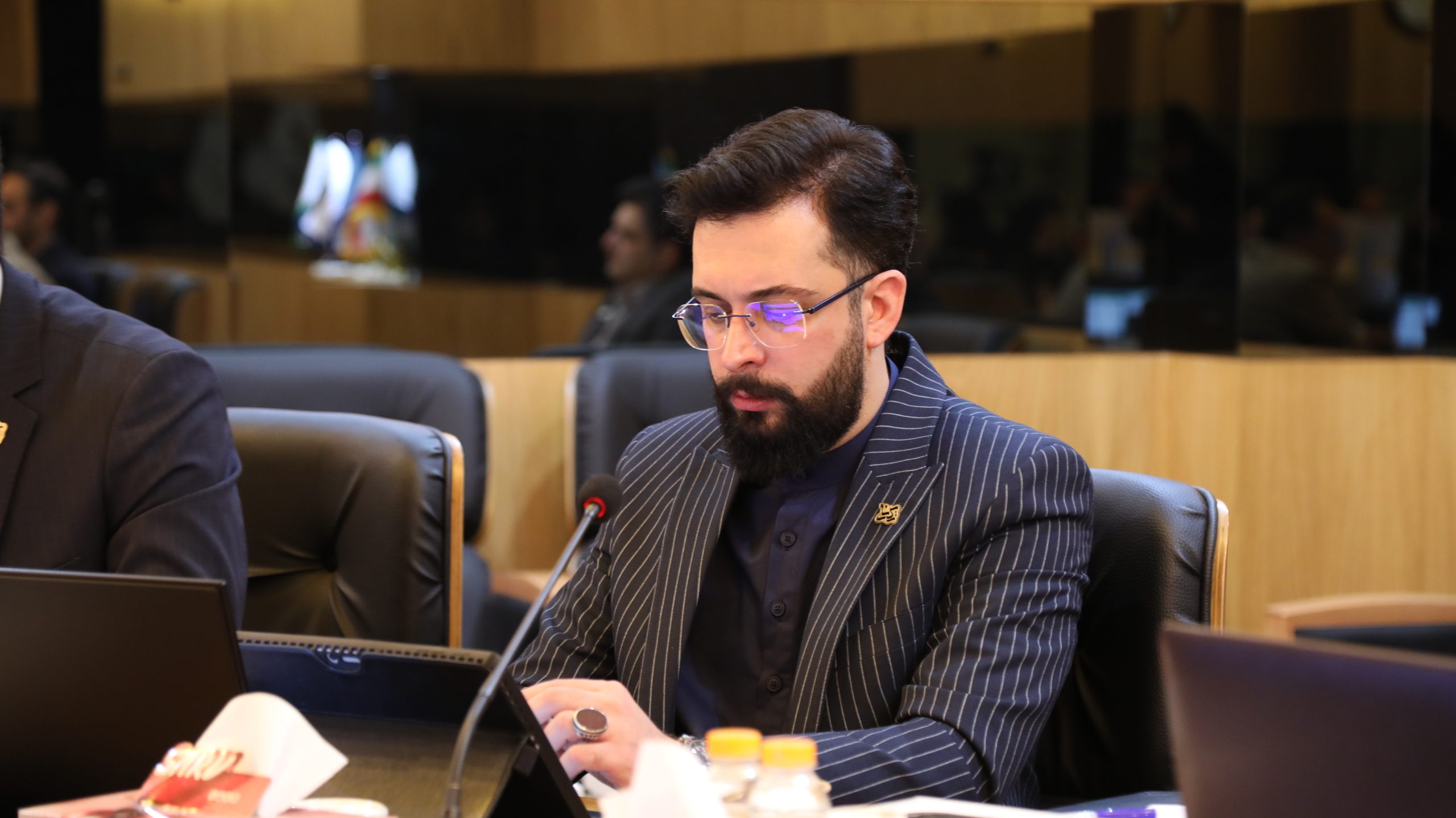
Masoud Asadi-Taheri, Vice Chairman of the Board and CEO of Taknar Copper Mines Complex, says that despite all its problems, Iran’s mining future has development capacity—but that future will not materialize on its own. If sustainable energy, machinery, investment, and technology are not provided, part of the country’s mining capacity will remain only potential.
While the mining and mineral industries chain is grappling with energy, fuel, blasting materials, machinery, and liquidity, copper in the global market and in Iran’s capital market is showing signs of a different period.
Iran’s mining industry in the second half of 1405 stands at a point that simultaneously presents several different pictures to economic actors: on the one hand, energy constraints, financing problems, aging machinery, difficulties in importing equipment, sanctions, and foreign trade restrictions have put considerable pressure on producers; on the other hand, the global metals market—especially copper—has drawn a new horizon for mining companies.
In fact, Iran’s mining sector today faces an important duality: challenges on the domestic production side and opportunity on the global market side. At the start of the second half of the year, mining sector operators warned about electricity and gas imbalances, rising production costs, transport problems, and difficulty accessing export markets. These factors can raise the full cost of production and affect the development plans of many mining firms; but on the other side, global demand for strategic minerals remains an important driver for the industry’s future, and among these materials copper holds a distinctive place.
Copper: a metal for the economy of the future
Copper is not merely an ordinary industrial metal. The development of power grids, renewable energy, electric vehicles, electronic equipment, data centers, and infrastructure related to artificial intelligence all require substantial copper consumption.
At the same time, rapidly increasing copper supply is not easy. Developing a new mine requires heavy investment, a long time frame, and suitable infrastructure. Global market reports in 2026 also emphasize constraints on mined supply and the importance of structural demand growth in supporting the copper market.
For this reason, copper has once again this year moved to the center of attention in global markets. This development is also observable in Iran’s domestic market.
Copper’s nod to the stock market
One of the important signs of this change is the behavior of the capital market and the commodities exchange. In the week ending at the end of Shahrivar 1405, copper, with more than 14 thousand billion tomans in transaction value, topped the value of transactions on the physical market of the Commodities Exchange.
On 29 Shahrivar as well, copper cathode produced by National Iranian Copper Industries Company was traded with 13.5 percent competition relative to the base price, and the value of that transaction exceeded 80 thousand billion tomans; demand was also reported at about one and a half times supply.
These figures are not merely a trading event; they are a sign of copper’s growing importance in Iran’s industrial chain and capital market.
In the equities market as well, mining and metals companies came into focus. For example, published reports on FMLI show that the company’s sales revenue in the first six months of 1405 reached about 329.9 thousand billion tomans, a 33 percent increase compared with the same period of the previous year.
On the other hand, the basic metals industry index also experienced a notable upward trend in Shahrivar, and market data show a tangible increase over three-month and six-month intervals.
This trend indicates that the capital market is gradually reassessing the value of companies backed by mineral assets, real production, and links to global metals markets.
Copper is not just an industrial commodity; it is part of the infrastructure of the world’s future economy
Masoud Asadi-Taheri, Vice Chairman of the Board and CEO of Taknar Copper Mines Complex, in analyzing today’s conditions of the country’s mining sector, holds that Iran’s mining issue is not merely the quantity of reserves, but how reserves are converted into economic capacity.
Referring to the current conditions of the mining sector, he said: “Today we must distinguish between ‘having a mineral reserve’ and ‘having an economic mine.’ Iran is an important country in terms of the diversity of minerals and exploration capacities, but the mere existence of a reserve does not mean the creation of economic value. For a mineral reserve to become wealth, exploration, investment, technology, energy, machinery, transport infrastructure, and markets must come together.”
Asadi-Taheri added: “At present, part of the country’s mining problem is precisely this gap between potential capacity and actual capacity, and in many cases the main problem is not that we lack reserves. The issue is that we have not yet converted all of the capacity of existing reserves into economic production.”
Emphasizing the importance of exploration, he stated: “Exploration must change from a temporary activity into a continuous process. A mine without exploration has a limited future. On the other hand, we must move toward new technologies. Increasing productivity, reducing energy and water consumption, controlling waste, and improving extraction and processing today are no longer a choice but an economic necessity for mining.”
This mining industry operator continued, referring to copper’s place in the global economy: “Copper is becoming one of the key metals of the world’s future economy. If we look at the development of power grids, electric vehicles, renewable energy, data centers, and digital infrastructure, we see that almost all of these areas need copper.”
He added: “Even the development of artificial intelligence is, from an infrastructure perspective, dependent on electricity and data centers, and the development of these infrastructures also increases copper consumption. Therefore copper should not be viewed merely from the perspective of its price today; it should be seen within the framework of structural transformations in the global economy.”
Asadi-Taheri, referring to risks in the global copper market, said: “The copper price is not always rising, and this risk must be taken seriously. The copper market, like any other commodity, has periods of boom and correction. China’s economy, global interest rates, warehouse inventories, trade and tariff policies, and the production status of the world’s major mines affect the price.”
He continued: “But there is one important difference, and that is on the supply side. Creating new capacity in the copper industry is time-consuming; therefore if demand grows faster and supply cannot keep pace with it, the market will face price pressure. In 2026 as well, constraints on mined supply have been one of the important topics in global copper market analysis.”
The CEO of Taknar Copper Mines Complex Co., regarding the opportunity before Iran, said: “An important opportunity is being created for Iran—of course on the condition that we do not use the opportunity only at the level of selling mineral material. We must develop the copper value chain. The more we move from ore toward concentrate, cathode, and downstream products, the more value-added is created. Therefore the future of Iran’s copper industry should be summarized in three words: exploration, productivity, and the value chain.”
Asadi-Taheri then pointed to energy as one of mining’s serious problems and said: “Mining and mineral industries cannot have a long-term development plan without sustainable energy. When a mine or a processing plant does not know how much electricity or gas it will have in the coming months, decision-making for investment becomes difficult.”
He stated: “An investor seeks predictability; therefore solving the energy issue does not mean only supplying electricity and gas—it is in fact creating investment security for the mining industry.”
This mining industry manager considered aging machinery another serious bottleneck in the mining sector and added: “Aging machinery means reduced productivity, increased production stoppages, increased fuel consumption, and increased repair costs. In the world’s mines today, data and automation have also become as important as machinery.”
Asadi-Taheri continued: “The mine of the future is a smarter and more data-driven mine. We must be able to use technology for exploration, extraction planning, grade control, fleet management, energy consumption, and even preventive maintenance of equipment.”
Emphasizing the importance of productivity under current conditions, he stated: “When production costs rise, the first solution should not be raising the sales price; rather, we should turn to cost reduction and productivity improvement. A mine can, with the same reserve and the same sales price, transform its economics merely by reducing waste, managing energy, reducing stoppages, and increasing efficiency. This outlook must be institutionalized across the entire mining chain.”
In another part of his remarks, Asadi-Taheri referred to the capital market’s attention to mining and metals companies and said: “One of the notable developments of recent months is the capital market’s attention to mining and metals companies, and several factors play a simultaneous role in this.”
He added: “First is the global price of metals and especially copper. Second is the rise in the foreign-exchange rate in the domestic economy, which affects the rial revenue of export-oriented companies. Third is the real assets of mining companies. When a company has a mineral reserve, production capacity, infrastructure, and a sales market, its value is not measured only by one quarter’s profit; part of the company’s value relates to its assets and future production capacity.”
This mining industry operator continued: “Fourth, the market is looking for companies that can convert growth in global commodity prices into real revenue and profit.”
Referring to the increasing attention of the capital market to companies with real asset backing, he said: “Merely being a mining company cannot be sufficient reason for valuation. The market ultimately demands real performance. A company that has a reserve but does not have economic production is not the same, economically, as a company that has continuous production, sales, profitability, and a development plan.”
Asadi-Taheri added: “Therefore it seems that an important development taking shape in the capital market is greater attention to the quality of assets and the ability to convert those assets into cash flow.”
Regarding copper companies as well, he stated: “For copper companies, in addition to these factors, the global outlook for copper itself is also important. For example, FMLI’s performance in the first half of 1405 and the 33 percent growth in its sales revenue compared with the same period of the previous year show that the increase in transaction values and market attention to the copper industry are not merely storytelling and are also observable at the operating revenue level of the industry’s large company.”
He continued: “When copper cathode is traded on the Commodities Exchange with 13.5 percent competition and a transaction value of more than 80 thousand billion tomans, these figures indicate the depth of demand and the importance of this metal in the domestic economy.”
Responding on whether copper companies’ situation is good, Asadi-Taheri said: “The capital market has sent a clear signal about the importance of the mining and metals industry, but it must be emphasized that this should not be equated with a short-term rise in share prices.”
He added: “The outlook for mining companies can be sustainable when three things happen at the same time: production increases, costs are controlled, and future reserves are developed. If these three occur, an increase in the company’s economic value will be more defensible.”
The CEO of Taknar Copper Mines Complex Co., regarding smaller copper companies as well, said: “Smaller companies also have the capacity to use these conditions, but for them one issue is much more important, and that is economic scale. In the mining industry, scale matters a great deal; if fixed costs are high and production remains low, even a favorable global price does not necessarily lead to profitability.”
He added: “Therefore smaller companies must focus on increasing productivity, increasing economic capacity, exploring new reserves, controlling costs, and completing the value chain. Under such conditions, the capital market will also look more carefully at the company’s performance.”
In summarizing the outlook for Iran’s mining sector, Asadi-Taheri said: “Despite all its problems, Iran’s mining future has development capacity—but that future will not materialize on its own. If sustainable energy, machinery, investment, and technology are not provided, part of the country’s mining capacity will remain only potential.”
He noted: “If these obstacles are reduced, Iran can take a larger share of global demand growth for strategic minerals, especially copper. Copper can be one of the drivers of Iran’s mining development, provided that policymaking moves away from raw-material selling and prioritizes the development of exploration, processing, production, and the value chain.”
Mining at a point of change
What is seen in Iran’s mining industry in the second half of 1405 is an apparent contradiction: pressure on domestic production has increased, but the economic value of strategic minerals is becoming more prominent.
On the one hand, mining operators are grappling with energy, equipment, capital, and foreign trade. On the other hand, the global market for metals such as copper—because of the development of electricity, new energies, electric vehicles, and digital infrastructure—has placed an important outlook before producers.
In the domestic market as well, signs of this change are observable. Copper topping Commodities Exchange transaction value, significant competition to buy cathode, and revenue growth at large copper companies present a picture of this metal’s rising importance in Iran’s economy.
From this perspective, the stock market’s renewed attention to mining companies—and especially copper companies—can be seen as part of a larger trend: the movement of capital toward companies that, alongside real assets, have production capacity and the ability to create cash flow from those assets.
Masoud Asadi-Taheri, looking from inside the industry, also sees Iran’s mining issue less as a shortage of reserves and more as a matter of infrastructure, capital, technology, energy, and productivity. Ultimately, Iran’s mining future depends not merely on the quantity of existing reserves but on the country’s ability to convert those reserves into economic production, value-added, exports, and competitive companies—and among these, copper is one of the most important metals that can represent this path.
No comment